
When the position and the network can't be taken on trust: spoofing evidence, Singapore's cyber bill and the bridge
2 November 2026
Digital Ship recently posted two articles that may seem unrelated at first: One is about satellite validation, the other about port legislation in Singapore. Read together, they point at the same thing: the data a ship shows the world and the systems that carry that data are now treated as something to verify and regulate. For bridge teams and fleet managers, that has very practical consequences.
From "probable" to "confirmed" spoofing
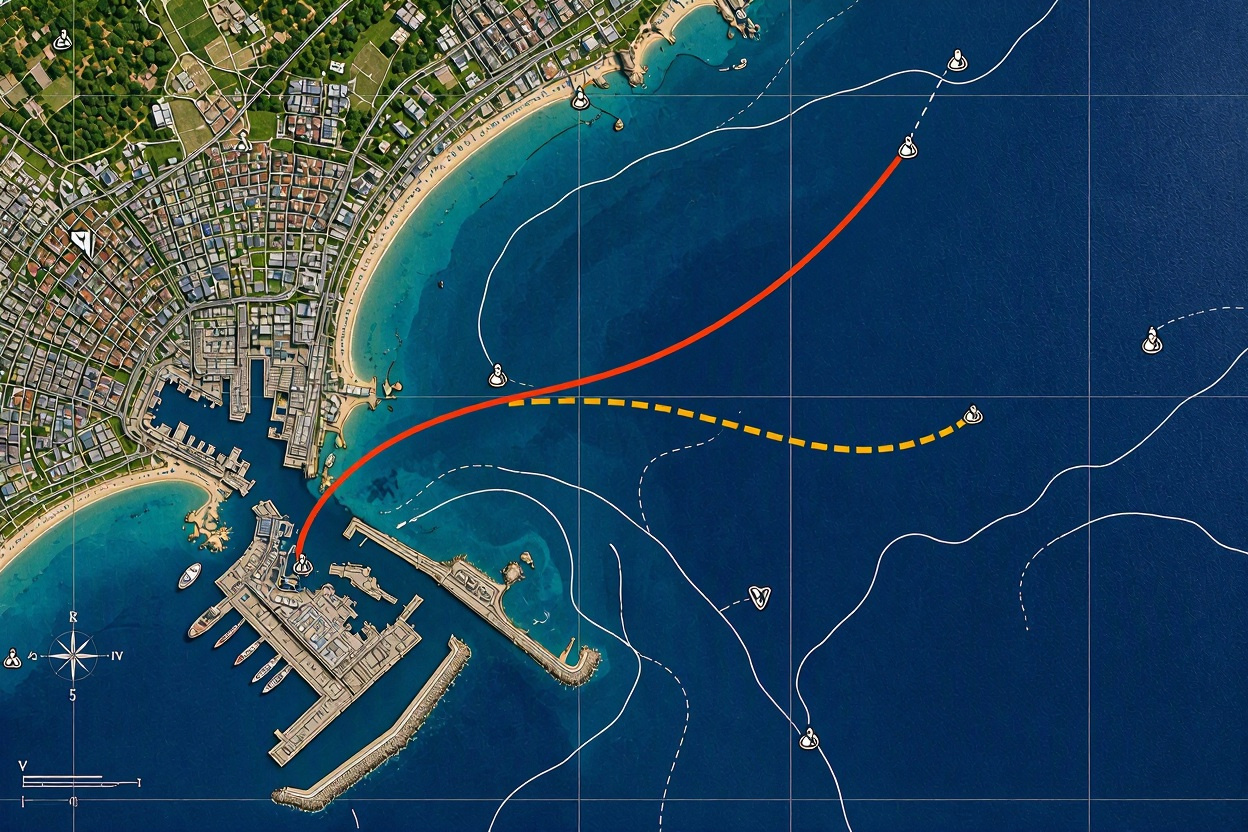
On 8 October “Digital Ship” reported that Lloyd's List Intelligence has added Satellite Confirmed Spoofing to its Seasearcher platform. When the system flags a likely false AIS position, it automatically looks for suitable optical or radar (SAR) satellite imagery of the same area and time. If no vessel is visible where AIS says one should be, the event is upgraded from "probable AIS spoofing" to "confirmed AIS spoofing". The company's Chief Research Officer, Arne Staal, put it plainly: detection models are by nature probabilistic, and imagery lets users act on "what the imagery shows rather than what a vessel chose to report."
The tool is aimed at compliance teams, insurers and regulators, not at the bridge. But the message for shipowners is clear. A vessel's reported track is increasingly checked against independent evidence, and charterers, insurers and authorities will hold the evidence trail. A ship that is itself the victim of GNSS interference, and drifts into an anomalous AIS picture, needs to be able to show what the bridge saw and did.
Singapore writes cyber and autonomy into port law
The same day, “Digital Ship” covered the intent to change the Maritime and Port Authority of Singapore (Amendment) Bill. These changes would address the evolution of maritime operations since the bill was first enacted, in 1996. The Bill would let MPA designate maritime systems as Important Information Infrastructure, set cybersecurity requirements for them, issue directions and require readiness measures, complementing Singapore's Cybersecurity Act 2018. It also gives MPA a legal basis to regulate autonomous surface vessels, aerial drones and AI used in maritime operations. The Amendment Bill was introduced for First Reading in Parliament on 6 October and Second Reading is scheduled for November 2026, so details can still change. The designation powers will initially bite on shore-side and port systems rather than every ship calling at Singapore.
The direction of travel is the point. One of the world's busiest bunkering and transhipment hubs is moving cyber from guidance to enforceable requirement, and operators trading there should expect questions about how their own digital systems are managed.
What this means on board
Neither story changes how an ECDIS works but both raise the bar on how it is run:
- Position integrity.
Where GNSS interference is a known risk, the safeguards are old-fashioned and effective: radar overlay and parallel indexing, visual and radar fixes against the ENC, and a primary/secondary position source set up properly in the ECDIS. Logging the interference and the cross-checks matters as much as doing them. - Alarm settings that mean something.
An ECDIS that has been configured carelessly either cries wolf or stays silent. Position-source alarms, safety contour and safety depth should reflect the vessel and the voyage, not factory defaults. - Update hygiene.
Chart permits, ENC updates and ECDIS software reach the ship over connected systems. Every transfer route (email, USB, ship–shore sync) is an attack surface. A controlled, documented update path is part of cyber risk management under IMO's 2021 requirements for Safety Management Systems, and it is the kind of thing a regulator like MPA will ask to see. - Evidence.
If a track is ever questioned, the voyage record, ECDIS logs and passage plan are the vessel's defence.
Where Bogerd Martin and Chart Track fit
Bogerd Martin supplies AVCS and ADMIRALTY digital services under the licence model that suits your fleet, including Pay As You Sail. Combined with Chart Track’s CTSecure, which has an integrated firewall, vessels can safely receive their AVCS and AIO permits, updates and even routes, directly from the Chart Track server to their ECDIS. It's easily set up and provides you with enhanced tracking options.
CT Navigator Suite software on vessel side provides easy ordering and voyage optimisation, while CT NavLog helps keep the voyage record in one place.
Questions about chart licensing, secure updates and cyber security solutions across your fleet? Contact us at sales@bogerdmartin.com.
A caution: no software makes a spoofed position true, and no cyber framework replaces a watchkeeper who cross-checks. The tools help the bridge team notice sooner and show their work afterwards.